AI-Powered SaaS Solutions
 Karuna
AI-powered SaaS solutions are transforming how businesses operate. If you're planning to build one, understanding AI SaaS platform development is essential. Companies no longer want tools that just store data. They want systems that think, automate, and improve results.
But here is the truth. Most AI SaaS products fail. Not because AI is weak, but because the solution does not solve a real problem.
If you want to understand AI-powered SaaS solutions the right way—or build one that succeeds—this guide will help you. It explains everything in simple terms, with real examples and clear steps you can follow.
Many SaaS businesses struggle with slow workflows, rising support costs, and manual operations. AI-powered SaaS platforms solve these problems using automation, AI agents, and intelligent workflows.
What Are AI-Powered SaaS Solutions?
AI-powered SaaS solutions are cloud-based software tools that use artificial intelligence to automate tasks, improve decisions, and solve real business problems.
Users access these tools online. They do not install anything. They simply log in and use the software.
Simple definition:
AI-powered SaaS solutions are software applications that use AI to deliver automated, scalable, and intelligent services through the cloud.
Why AI-Powered SaaS Solutions Are Growing Fast
AI SaaS platforms are growing because they provide real business value.
Businesses today face three main challenges:
- Too much manual work
- High operational costs
- Slow decision-making
AI SaaS solves all three.
Key reasons for growth
- Automation reduces time
- AI improves accuracy
- SaaS enables scalability
- Subscription model ensures recurring revenue
This is why startups, enterprises, and even small businesses are investing in AI-powered SaaS solutions.
The Biggest Problem With AI SaaS Today
Most AI SaaS products fail because they focus on AI instead of the user.
Common mistakes:
- Building generic tools
- No clear use case
- Too many features
- No workflow integration
What happens:
- Users don’t adopt the product
- Retention drops
- Revenue fails
Key Insight
The best AI SaaS applications solve one clear, repeated business problem and deliver results instantly.
Real Problem-Solution Examples
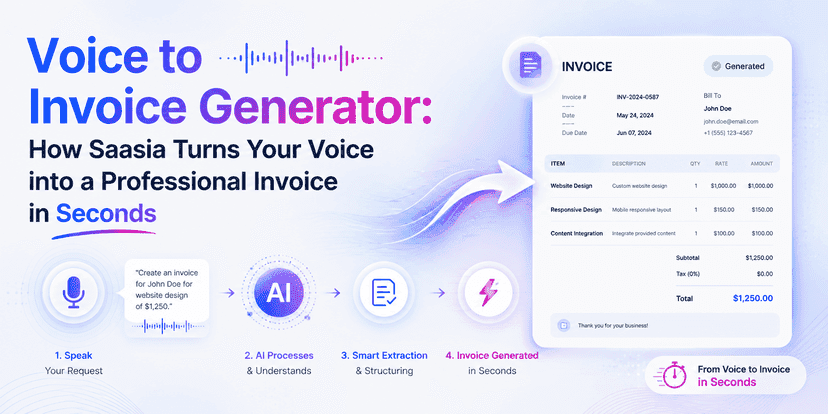
Problem 1: Manual Invoice Creation
Many businesses still create invoices manually using Excel or Word.
Real issues:
- Takes 10–20 minutes per invoice
- Repetitive data entry
- Calculation errors
- Unprofessional output
Business impact:
- Delayed payments
- Lost time
- Poor brand image
Solution: AI Invoice Generator
AI business automation tools can automate invoice creation completely.
How it works:
- User inputs basic details
- AI generates full invoice instantly
- Auto tax and totals
- Clean professional format
Results:

👉 Businesses save hours every week and reduce mistakes.
Problem 2: Low Google Reviews
Customer reviews are critical for business growth. But most companies struggle to collect them.
Issues:
- Customers forget
- No follow-up system
- Only negative reviews appear
Solution: AI Review Automation
Intelligent SaaS platforms can automate customer feedback.
Features:
- Sends automated review requests
- Guides customers
- Suggests AI responses
Results:

👉 This directly improves visibility and conversions.
Types of AI-Powered SaaS Solutions
AI-powered SaaS solutions are used across industries.
1. AI Automation Tools
AI automation tools are used for repetitive tasks like data entry, scheduling, and workflow automation. These tools reduce manual effort and help businesses complete tasks faster and more accurately.
They improve efficiency by handling routine operations without human intervention. This allows teams to focus on important work instead of repetitive tasks. AI software solutions in automation are widely used in industries like finance, HR, and operations to save time and reduce costs.
2. AI Content Tools
AI content tools generate blogs, ads, emails, and social media content quickly. They help businesses create high-quality content without spending too much time or resources.
These tools are useful for marketers, writers, and businesses that need consistent content output. They also help maintain tone, style, and brand consistency. AI automation platforms for content creation are becoming essential for scaling digital marketing efforts.
3. AI Customer Support Tools
AI customer support tools include chatbots, ticket automation, and response suggestions. These tools provide instant replies to customer queries and improve response time.
They help businesses handle large volumes of support requests without increasing team size. This improves customer satisfaction and reduces workload. AI-powered SaaS solutions in support are widely used to deliver 24/7 service and improve user experience.
4. AI Analytics Tools
AI analytics tools provide insights, predictions, and business intelligence based on data. They analyze large datasets quickly and identify patterns that are hard to detect manually.
These insights help businesses make better decisions and plan strategies effectively. Real-time analytics allows companies to respond faster to changes. AI SaaS platforms in analytics are critical for growth, performance tracking, and data-driven decision-making.
5. AI Workflow & Productivity Tools
AI workflow and productivity tools automate internal operations and improve team efficiency. They help streamline processes, reduce delays, and manage tasks effectively.
These tools ensure that workflows run smoothly without manual intervention. This leads to better productivity and faster task completion. AI-powered SaaS products in productivity help teams stay organised and focus on high-impact work.
How to Build AI-Powered SaaS Solutions (Step-by-Step)
Step 1: Identify a Real Problem
Look for problems that:
- Happen daily
- Waste time
- Cost money
👉 Example: invoice creation, customer support
Step 2: Validate the Idea
Before building:
- Talk to users
- Understand pain points
- Check demand
👉 If users say, “I need this,” you are ready.
Step 3: Choose AI Technology

Step 4: Build MVP
Focus on:
- One feature
- Fast output
- Simple UI
Step 5: Improve User Experience
Your tool should be:
- Easy
- Fast
- Clear
Bad UX = product failure.
Step 6: Launch and Improve
- Collect feedback
- Improve continuously
- Scale gradually
Benefits of AI-Powered SaaS Solutions
1. Saves Time
Automates repetitive tasks instantly.
AI-powered SaaS solutions remove the need for manual work like data entry, email replies, and reporting. This allows teams to focus on high-value tasks instead of spending hours on routine work. Businesses can complete tasks in minutes that previously took hours or even days. Faster execution leads to improved productivity and better overall performance.
2. Reduces Costs
Less dependency on manual work.
AI tools reduce the need for large teams by handling repetitive operations automatically. Businesses can save money on hiring, training, and operational expenses. With SaaS models, you only pay for what you use, making it cost-efficient for startups. Over time, automation helps increase profit margins while lowering overhead costs.
3. Improves Accuracy
Minimises human errors.
Manual processes often lead to mistakes in calculations, data entry, or communication. AI systems process information consistently and reduce the risk of errors. This is especially important in areas like finance, invoicing, and analytics. Better accuracy improves trust, reliability, and decision-making across the business.
4. Scales Easily
Handles growth without increasing cost.
AI-powered SaaS solutions can handle more users and data without major changes to the system. As your business grows, the software continues to perform without needing more resources. This makes scaling operations smooth and efficient without adding extra costs. It allows businesses to expand faster without worrying about infrastructure limits.
5. Better Decision-Making
AI provides insights based on data.
AI analyses large amounts of data quickly and finds patterns that humans may miss. These insights help businesses make smarter and faster decisions. Real-time analytics allows companies to respond to changes immediately. Data-driven decisions lead to better strategies and long-term growth.
Common Challenges (And Solutions)
Challenge 1: High AI Cost
👉 Use APIs and optimise usage.
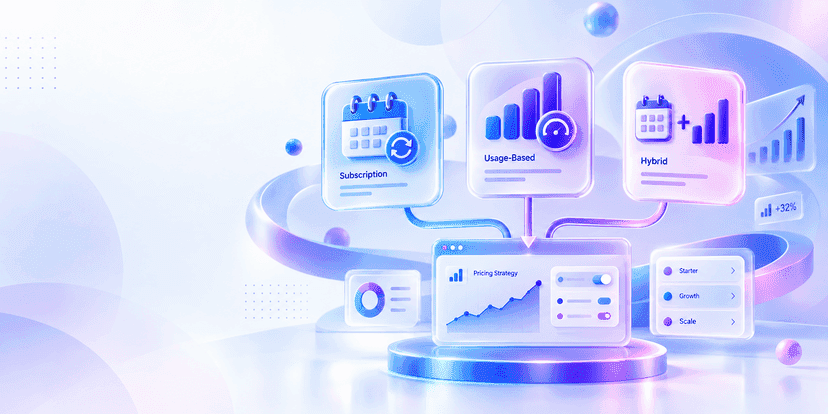
AI tools can become expensive if not managed properly. Many startups fail because they do not control API usage and scaling costs early. Start with pay-as-you-go models and track usage carefully to avoid unnecessary spending. You can also cache results and reuse outputs to reduce repeated API calls and lower overall costs. Choosing the right pricing model for your SaaS product will help you balance cost and profit.
Challenge 2: Poor AI Output
👉 Improve prompts and data quality.
AI output depends heavily on how you guide it. Weak prompts lead to poor results and user frustration. You should design clear and structured prompts that give better instructions to the AI system. Training or fine-tuning with real business data can also improve accuracy and relevance. Always allow users to edit and refine outputs to build trust and improve experience.
Challenge 3: Low User Adoption
👉 Improve onboarding and UX.
Even a powerful AI tool will fail if users don’t understand how to use it. Simple onboarding flows and guided steps can help users see value quickly. Focus on delivering results within the first few minutes of usage to increase engagement. Adding templates, examples, and tooltips can make the product easier and more user-friendly.
Challenge 4: High Competition
👉 Focus on niche problems.
The AI SaaS market is crowded, so generic tools struggle to stand out. Instead of building for everyone, target a specific industry or use case. Niche-focused solutions solve deeper problems and attract more loyal users. Differentiation through better user experience and real problem-solving will help you win.
Frequently Asked Questions (FAQs)
1. What are AI-powered SaaS solutions?
They are cloud-based tools that use AI to automate tasks and improve business outcomes. These solutions help businesses reduce manual work and improve efficiency across operations. They are widely used in industries like finance, marketing, customer support, and e-commerce.
2. How do AI SaaS solutions work?
They use AI models to process data and deliver automated results. These systems analyze inputs, learn patterns, and generate outputs based on trained algorithms. They integrate with existing tools to improve workflows and decision-making.
3. What are examples of AI SaaS solutions?
Invoice generators, chatbots, analytics tools, and content generators. These tools help automate daily business tasks and improve productivity. Many companies use them to scale operations without increasing team size.
4. Are AI-powered SaaS solutions profitable?
Yes, they generate recurring revenue and scale easily. The subscription model ensures consistent income for businesses over time. As usage grows, profit margins improve due to low incremental costs.
5. How much does it cost to build one?
Basic MVP costs between $5,000 and $50,000. The cost depends on features, complexity, and AI integration level. Using APIs can reduce development costs and speed up the process.
6. Do I need AI expertise?
No, you can use APIs to build solutions. Many platforms provide ready-to-use AI models for developers and startups. Basic understanding of workflows and problem-solving is often enough to get started.
7. What is the best AI SaaS idea?
A tool that solves a frequent and painful business problem. The best ideas focus on automation and saving time for users. Niche-specific solutions often perform better than broad tools.
8. How long does it take to build?
4–12 weeks for MVP. Development time depends on the complexity and feature set of the product. Faster builds are possible when using pre-built AI tools and APIs.
Conclusion
AI-powered SaaS solutions are not just about using AI. They are about solving real business problems in a simple way.
The companies that win are the ones that focus on users, not features. When your product saves time, reduces cost, and improves results, it will succeed.
If you want to build or use AI-powered SaaS solutions:
👉 Start with a real problem
👉 Build a simple solution
👉 Focus on user value
The future belongs to businesses that use AI the right way. Explore how InfiniAppsAI can help automate your business
Want to build an AI SaaS platform?
Start with a simple MVP and identify workflows that can reduce operational costs and improve scalability.