What is an AI Agent? Complete Guide with Examples (2026)
 Sasikumar
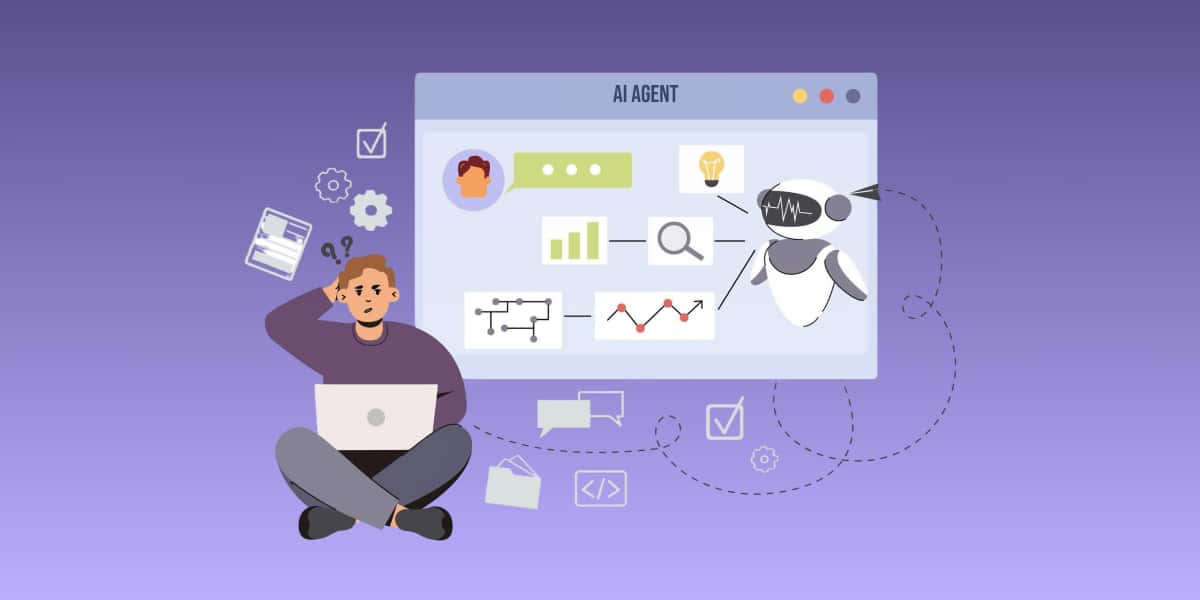
An AI agent is a smart software system that can understand a goal, make decisions, and take actions on its own. It uses artificial intelligence, memory, and tools to complete tasks without step-by-step human instructions.
Introduction: Why Everyone is Talking About AI Agents
AI is changing very fast.
A few years ago, AI could:
- Answer questions
- Write content
- Give suggestions
But today, AI is doing more.
It is taking action and completing tasks.
This is called an AI agent.
Instead of telling AI every step, you now give it one goal.
Then the AI agent plans everything and finishes the work.
This is a big shift.
It changes how
- Businesses operate
- Teams work
- Individuals manage tasks
In simple terms, we are moving from the following:
Using AI tools → Working with AI workers
If you understand AI agents now, you can save time, reduce cost, and stay ahead.
What is an AI agent?
An AI agent is a system that can:
- Understand a goal
- Break the goal into steps
- Make decisions
- Take actions
- Learn from results
It works like a digital assistant that can think and act.
Simple Example to Understand AI Agents
Let’s say you want to grow your business.
You tell a normal AI tool:
“Write an email."
You tell an AI agent:
“Find customers and send emails."
Now see the difference.
The AI agent will:
- Search for potential customers
- Collect their contact details
- Write personalised emails
- Send emails
- Track replies and follow up
You only give one instruction. The AI agent does everything.
Choose an AI agent development company with proven experience, strong technical skills, and clear communication.
AI Agent vs Chatbot vs Automation Tools
This is where many people get confused.
Chatbot
- Answers questions
- Stops after reply
Automation Tools
- Follow fixed rules
- Cannot think or adapt
AI Agent
- Understands goals
- Makes decisions
- Performs actions

Key takeaway:
AI agents combine thinking + action.
How Does an AI Agent Work? (Step-by-Step Flow)
AI agents follow a simple loop.
Step 1: Observe
The agent collects data from:
- User input
- Websites
- Apps
- Databases
Example: It gathers leads from the internet.
Step 2: Think
The agent decides:
- What is the goal?
- What is the best next step?
- Which tool should be used?
Example: It decides to filter high-quality leads.
Step 3: Act
The agent performs actions like the following:
- Writing emails
- Sending messages
- Running tasks
Example: It sends emails to selected leads.
Step 4: Learn
The agent improves by:
- Tracking results
- Saving memory
- Adjusting strategy
Example: It improves email content based on replies.
This loop continues until the goal is achieved.
Key Components of an AI Agent
To understand AI agents deeply, look at what they are made of.
1. AI Brain (LLM)
This is the core intelligence.
It helps the agent:
- Understand language
- Make decisions
- Generate output
Example: GPT-based models.
2. Memory
Stores important data like:
- Past actions
- User preferences
- Context
Helps the agent improve over time.
3. Tools
AI agents connect to tools such as the following:
- Email platforms
- CRMs
- APIs
- Databases
This allows them to take real-world actions.
4. Planner
Breaks a big goal into small steps.
Example:
“Get leads” → Search → Filter → Email → Follow up
5. Executor
Performs tasks step by step.
Together, these components make AI agents powerful.
Types of AI Agents
AI agents are not all the same.
1. Reactive Agents
- No memory
- Respond only to current input
Example: Basic chatbot
2. Goal-Based Agents
- Work toward a goal
- Plan actions
Example: AI travel planner
3. Learning Agents
- Improve over time
- Learn from data
Example: Netflix recommendations
4. Autonomous Agents
- Work independently
- Handle complex workflows
Example: AI business assistant
Real-World Examples of AI Agents (2026)
AI agents are already used in many industries.
1. Customer Support AI Agent
What it does:
- Answers customer queries
- Resolves issues
- Escalates complex cases
Benefits:
- 24/7 support
- Faster response
- Lower cost
2. AI Sales Agent
What it does:
- Finds leads
- Sends emails
- Follows up automatically
Benefits:
- More conversions
- Saves time
- Works nonstop
3. AI Content Agent
What it does:
- Researches topics
- Writes blog posts
- Optimises for SEO
Benefits:
- Faster content production
- Consistent quality
4. AI Coding Agent
What it does:
- Writes code
- Fixes bugs
- Runs tests
Benefits:
- Faster development
- Less manual work
5. Personal AI Assistant
What it does:
- Manages calendar
- Books meetings
- Sends reminders
Benefits:
- Saves daily time
- Improves productivity
Why AI Agents Matter in 2026
AI agents are not just tools.
They are becoming digital workers.
1. Save Time
They automate:
- Repetitive tasks
- Daily operations
2. Reduce Costs
Businesses spend less on manual work.
3. Work 24/7
AI agents never stop.
4. Scale Work Easily
One agent can handle many tasks.
5. Improve Efficiency
Work gets done faster and better.
Problems AI Agents Solve
Problem 1: Too Many Tasks
People feel overwhelmed.
Solution: AI agents handle repetitive work
Problem 2: Slow Processes
Manual work takes time.
Solution: AI agents act instantly
Problem 3: High Costs
Hiring people is expensive.
Solution: AI agents reduce workload
Problem 4: Human Errors
Mistakes happen.
Solution: AI agents follow structured logic
How to Use AI Agents
Step 1: Define a Clear Goal
Example:
- “Get 100 leads in 7 days”
Clear goals improve results.
Step 2: Choose the Right Tool
Popular tools:
- ChatGPT Agents
- AutoGPT
- CrewAI
- LangChain
Step 3: Connect Tools
Link your agent to:
- CRM
- APIs
- Docs
Step 4: Set Rules and Limits
Define:
- Budget
- Permissions
- Boundaries
Step 5: Monitor Performance
Check:
- Output quality
- Errors
- Results
Always review AI work.
Best Practices for Using AI Agents
- Start with small tasks
- Use clear instructions
- Monitor actions regularly
- Add human approval steps
- Improve based on results
Treat AI agents like employees.
AI Agents vs Automation Tools

AI agents are smarter and more flexible.
Challenges and Risks of AI Agents
1. Errors and Hallucinations
AI may produce wrong outputs.
2. Over-automation
Too much automation can break systems.
3. Security Risks
Agents may access sensitive data.
4. Lack of Control
Agents may behave unexpectedly.
Always monitor and set limits.
Future of AI Agents
The future is clear.
By 2026 and beyond:
- Everyone will have AI assistants.
- Businesses will use AI teams.
- Work will become faster
The shift is
From doing work → Managing AI systems
Who Should Use AI Agents?
AI agents are useful for:
- Business owners
- Marketers
- Developers
- Freelancers
- Students
Anyone who wants to save time and scale work.
Common Mistakes to Avoid
- Giving unclear instructions
- Not monitoring outputs
- Using too many tools
- Ignoring data privacy
FAQs on AI agent development
1. What is an AI agent?
An AI agent is a software system that can understand data, make decisions, and take actions automatically to complete tasks without constant human input.
2. How do AI agents work?
AI agents follow three steps:
- Collect data (input)
- Process it using AI models
- Take action or give output
3. What are examples of AI agents?
Common examples include:
- Customer support chatbots
- Virtual assistants
- Recommendation systems
- AI automation tools
4. What is the difference between AI agents and chatbots?
AI agents can make decisions and perform tasks, while chatbots mainly respond to user queries. AI agents are more advanced and autonomous.
5. What are the types of AI agents?
Main types include:
- Reactive agents
- Learning agents
- Autonomous agents
- Multi-agent systems
6. How much does it cost to build an AI agent?
The cost ranges from $5,000 to $50,000+ depending on features, AI model complexity, and integrations.
7. Where are AI agents used?
AI agents are used in:
- Business automation
- Customer support
- E-commerce
- SaaS platforms
- Mobile applications
8. Are AI agents safe to use?
Yes, AI agents are safe when built with proper security, monitoring, and data controls.
9. Can AI agents replace human jobs?
AI agents mainly automate repetitive tasks. They support humans rather than completely replacing jobs.
10. Why are AI agents important for businesses?
AI agents help businesses:
- Save time
- Reduce costs
- Improve efficiency
- Deliver better user experiences
Final Thoughts
AI agents are changing how software works. They help businesses automate tasks, make faster decisions, and deliver better user experiences.
The key is simple: start small, focus on the right use case, and scale step by step. AI agents are not just a trend. They are becoming a core part of modern applications and business growth.
Ready to build AI agents for your business?
The InfiniappsAI team can help you design, develop, and deploy powerful AI agent solutions tailored to your needs.
Get in touch today for a free consultation and cost estimate.