How to Choose the Right AI Agent Development Company in 2026
 Karuna
Your inbox is full of pitches. Everyone says, "We build AI agents." Everyone promises speed, scale, and ROI.
But here's the problem no one talks about: most AI agent projects fail quietly. Not with a crash, with a slow fade. A pilot that never reaches production. A chatbot rebranded as an "agent", a vendor who disappears after the demo.
If you're a CEO or CTO evaluating vendors in 2026, you don't need more hype. You need a clear, repeatable way to choose the right AI agent development company — one that separates real engineering from a repackaged script.
This guide walks you through exactly that: what AI agent development actually means, the step-by-step process for choosing the right company, real cost benchmarks, common mistakes to avoid, and the metrics that prove an agent is actually working.
What Is an AI Agent Development Company, and Why Does Choosing the Right One Matter?
What is an AI agent, really?
An AI agent is software that can plan, decide, and act — mostly on its own. It doesn't just answer a question. It completes a task.
A chatbot replies. An agent does. It can check a database, call an API, update a record, and follow up — without a human clicking every button.
Why does AI agent development need a specialised company?
Traditional software follows fixed rules. Chatbots follow scripts. Agents make decisions using reasoning, memory, and tools. Building one requires skills most general dev shops simply don't have:
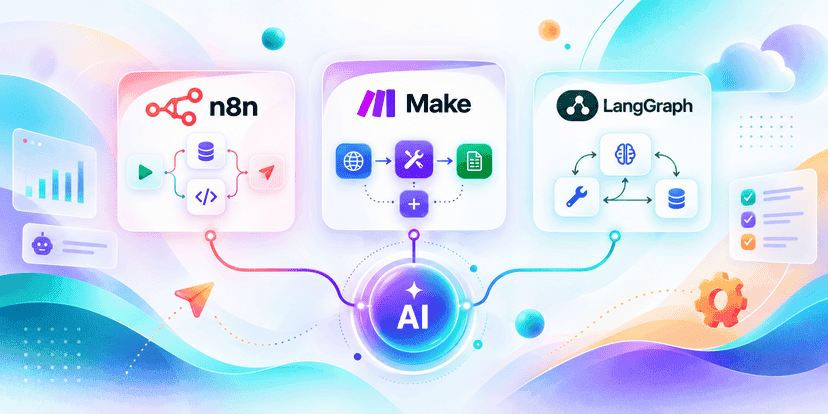
- Multi-agent orchestration (LangGraph, CrewAI, AutoGen)
- Long-term memory using vector databases
- Secure tool-calling and API integration
- Guardrails against hallucination and unsafe actions
Get any of these wrong, and the agent breaks in production — even if the demo looked perfect. This is exactly why how you choose an AI agent development company matters more than which AI model you pick.
When should you bring in an AI agent development company?
Bring one in when:
- Manual tasks are repetitive but need judgement (support tickets, claims review, inventory checks)
- You want 24/7 operations without 24/7 staffing
- Your team lacks in-house LLM and agent-orchestration expertise
Who actually needs custom AI agent development?
A custom AI agent development company where decisions repeat thousands of times a month: finance, healthcare, e-commerce, logistics, insurance, and HR. If a task is rule-based but judgement-heavy, it's a strong candidate for an AI agent.
The Real Benefits of Choosing the Right AI Agent Development Company
1. Faster time-to-value A seasoned team reuses proven agent frameworks instead of building from zero. An e-commerce order-tracking agent can go live in weeks, not months, when built on tested architecture.
2. Lower long-term cost Poorly built agents need constant patching. A well-architected one, with proper memory and monitoring, needs far less rework.
3. Better accuracy and fewer hallucinations The right AI agent development company builds with retrieval-augmented generation (RAG) and validation layers — keeping answers grounded in real data, not guesses.
4. Scalability across departments One well-designed agent framework can expand — a finance agent today, an HR agent next quarter — using the same core infrastructure.
5. Stronger security posture Top AI agent development companies bake in access controls, audit logs, and data encryption from the start, not as an afterthought.
6. Competitive differentiation Custom agents reflect your actual workflows and brand voice. Off-the-shelf tools can't do that.
How to Choose the Right AI Agent Development Company: An 8-Step Process
Step 1: Define the business problem, not the technology.
Don't start with "We want an AI agent." Start with "We lose 10 hours a week on manual invoice checks." Clear problems get better proposals — and help you filter out companies that only pitch technology, not outcomes.
Step 2: Shortlist vendors by proof, not promises
Ask for real case studies, not screenshots. A credible AI agent development company will show measurable before-and-after results, not just a polished demo.
Step 3: Check their technical stack.
Ask which frameworks they use — LangGraph, CrewAI, AutoGen — and why. A team that can explain trade-offs knows what they're doing. A team that just says "we use the latest AI" usually doesn't.
Step 4: Review their security and compliance approach
Ask directly: How is data encrypted? Who can access agent logs? Is there human oversight for high-risk actions? The right company will have clear, specific answers — not vague reassurances.
Step 5: Run a paid pilot, not a free demo.
A short, scoped pilot (2–4 weeks) reveals more than any sales deck. It shows real integration challenges and real team communication — the true test of whether this is the right AI agent development company for you.
Step 6: Evaluate the cost model
Costs vary widely—from $15,000 for a single-task agent to $150,000+ for enterprise multi-agent systems. Get a full breakdown: build cost, hosting, maintenance, and model usage fees.
Step 7: Confirm post-launch support
Agents need monitoring and retraining. Choose a partner offering ongoing support, not just a handoff.
Step 8: Sign with clear success metrics
Define KPIs before the contract — accuracy rate, response time, cost saved per month. This protects both sides and gives you a clear way to evaluate whether you chose the right partner.
Common Mistakes to Avoid When Choosing an AI Agent Development Company
Mistake: Falling for "autonomous" overselling. Many teams rebrand a chatbot as an "agent". Ask for a live technical walkthrough, not a marketing demo.
Mistake: Ignoring data readiness Agents are only as good as the data they access. If your systems are messy, budget time for data cleanup before launch.
Mistake: No clear ownership after launch Some agencies vanish post-delivery. Lock in a support SLA in the contract before you sign.
Mistake: Underestimating integration complexity Connecting an agent to legacy systems (CRM, ERP, ticketing tools) is often harder than building the agent itself. Ask vendors for their integration track record upfront.
Mistake: Delaying security review Retrofitting security after launch is expensive and risky. Insist on a security review before go-live.
Best practice: Treat your first agent as a controlled pilot with a clear rollback plan. Prove value in one workflow before scaling company-wide.
Metrics That Prove You Chose the Right AI Agent Development Company
Look for measurable, not vague, outcomes:
- Task completion rate — percentage of tasks the agent finishes without human help
- Response accuracy — how often the agent gives a correct, grounded answer
- Cost per resolved task — compared to the human-handled cost
- Time saved per week/month — hours reclaimed from manual work
- Escalation rate — how often the agent hands off to a human (lower is usually better, but not always — some escalation shows good judgment)
- Uptime — agents should run reliably, not just in testing
Well-built agents in support, logistics, and finance commonly show a 30–60% reduction in manual handling time within the first few months, along with fewer errors than manual processes. Ask any AI agent development company to share real benchmark data from past projects, not industry averages.
AI Agent Development Trends to Watch in 2026
As you evaluate companies in 2026, ask how they're adapting to these shifts:
- Multi-agent systems becoming standard — single-purpose agents are giving way to orchestrated teams of agents handling end-to-end workflows
- Stronger regulatory scrutiny — especially in finance and healthcare, where audit trails and explainability are now baseline requirements
- Rising demand for vertical-specific agents — generic agents are losing ground to agents built for specific industries and workflows
A company that can speak knowledgeably about these shifts — rather than just repeating "AI agent" as a buzzword — is more likely to be the right long-term partner.
Conclusion
Choosing the right AI agent development company isn't about finding the flashiest demo. It's about finding a partner who understands your business problem, builds with the right architecture, and stays accountable after launch.
The companies that win with AI agents in 2026 aren't the ones who moved fastest. They're the ones who chose carefully — proof over promises, pilots over pitches, and partners over vendors.
Start small. Prove value. Then scale.
FAQs
What is an AI agent development company?
It's a specialised firm that designs, builds, and deploys AI agents — software that can reason, use tools, and complete tasks with minimal human input, unlike basic chatbots or scripts.
How do I choose the right AI agent development company?
Define your business problem first, shortlist vendors by proven case studies (not promises), check their technical stack, review their security approach, run a paid pilot, evaluate the full cost model, confirm post-launch support, and sign with clear success metrics.
How much does AI agent development cost?
Costs range from around $15,000 for a single-task agent to $150,000 or more for enterprise multi-agent systems, depending on complexity, integrations, and ongoing support.
What should I look for in an AI agent development company?
Look for proven case studies, clear technical expertise (frameworks, memory, security), transparent pricing, a pilot-first approach, and defined post-launch support.
Is CrewAI or LangGraph better for enterprise agents?
LangGraph suits complex, stateful workflows needing fine control over agent decisions. CrewAI suits simpler, role-based multi-agent collaboration. The right choice depends on your workflow complexity, not popularity.
How long does it take to build an AI agent?
A single-task agent can launch in 3–6 weeks. Enterprise multi-agent systems typically take 3–6 months, depending on integration depth.
What's the difference between an AI agent and an AI chatbot?
A chatbot answers questions. An agent completes tasks — checking systems, making decisions, and taking action, often across multiple steps.
Do I need in-house AI expertise to work with an agency?
No. A good AI agent development company handles the technical build. But having one internal owner to manage requirements and feedback speeds up the project significantly.
Can AI agents integrate with our existing software?
Yes. Most enterprise AI agent development services connect agents to CRMs, ERPs, ticketing systems, and internal databases through APIs — this is usually the most critical part of the build.
Ready to Build an AI Agent That Actually Works?
If manual, repetitive decisions are slowing your team down, it's time for a real conversation — not another demo.
Book a free consultation with our AI agent development team, or request a custom quote to see exactly what an agent could save your business.