How AI Agents Work in SaaS Platforms (Architecture Guide)
 Karuna
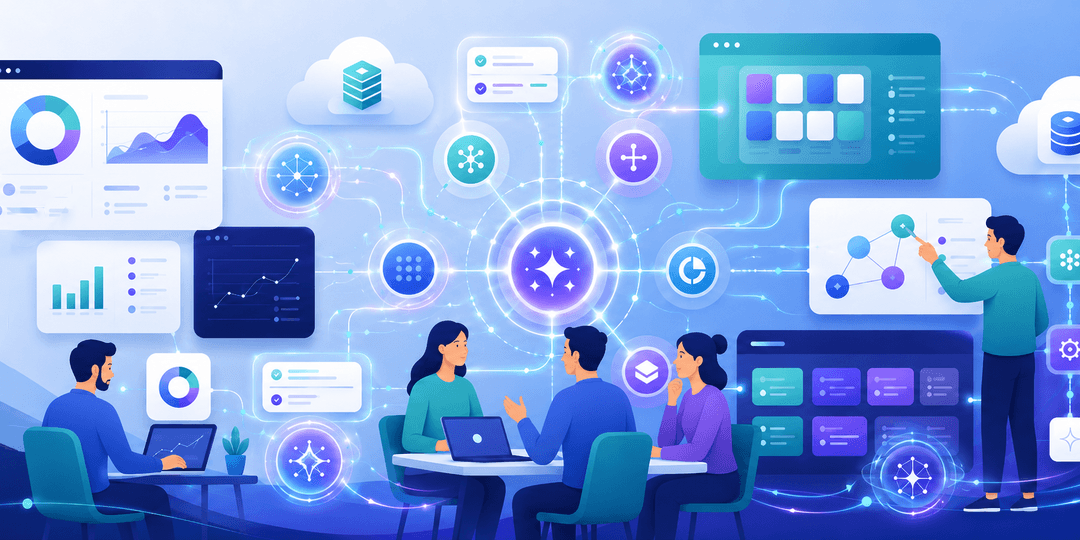
AI agents are changing SaaS platforms. Many SaaS companies now use AI agents every day.
These AI agents help businesses:
- Save time
- Reduce manual work
- Improve customer support
- Automate workflows
- Increase productivity
In 2026, AI agents are becoming a core part of SaaS products.
But many people still ask:
How do AI agents actually work inside SaaS platforms?
This guide explains:
- What AI agents are
- How AI agents work
- AI SaaS architecture
- AI workflows
- AI technologies
- Common challenges
- Best practices
What Are AI Agents in SaaS Platforms?
AI agents are smart software tools.
They can:
- Understand requests
- Process information
- Make decisions
- Perform tasks
- Automate workflows
AI agents work inside SaaS platforms to improve operations.
Unlike old chatbots, AI agents can:
- Remember context
- Access tools
- Search data
- Trigger workflows
- Perform actions automatically
This makes SaaS products smarter.
Why SaaS Companies Use AI Agents
SaaS companies manage many workflows.
Examples include:
- Customer support
- Reports
- User onboarding
- CRM updates
- Notifications
- Analytics
Manual work slows growth. AI agents help automate these tasks.
Main Problems AI Agents Solve

Types of AI Agents in SaaS Platforms
Different AI agents solve different problems.
AI Customer Support Agents
These agents help support teams.
They can:
- Answer questions
- Route tickets
- Automate replies
- Reduce wait time
Examples include:
- AI chatbots
- AI helpdesk systems
- AI voice assistants
AI Workflow Automation Agents
These agents automate internal tasks.
Examples include:
- Sending notifications
- Updating CRM data
- Processing workflows
- Automating reports
AI Analytics Agents
Analytics agents help businesses:
- Analyze data
- Create dashboards
- Predict trends
- Generate summaries
AI Sales Agents
Sales AI agents help businesses:
- Qualify leads
- Send outreach
- Schedule meetings
- Update CRMs
Enterprise AI Copilots
AI copilots help employees:
- Search documents
- Write content
- Analyze reports
- Automate daily tasks
How AI Agents Work in SaaS Platforms
AI agents follow a simple process.
The workflow usually includes:
- User input
- AI processing
- Data retrieval
- Decision-making
- Workflow execution
- Final response
Basic AI Agent Workflow

Core Components of AI SaaS Architecture
AI SaaS platforms use multiple layers.
Each layer handles a different task.
Frontend Layer
The frontend is the user interface.
Users interact through:
- Web apps
- Mobile apps
- Dashboards
- Chat windows
Popular front-end tools include the following:
- React
- Next.js
- Vue.js
API Layer
The API layer connects systems.
It helps AI agents communicate with:
- Databases
- SaaS tools
- AI models
- External services
Popular backend tools include the following:
- FastAPI
- Node.js
- Express.js
AI Model Layer
This layer powers AI reasoning.
Popular AI models include:
- GPT-4
- Claude
- Gemini
- Llama
These models help AI:
- Understand language
- Generate answers
- Process requests
- Make decisions
Retrieval Layer
AI agents need access to business data.
The retrieval layer helps AI:
- Search company documents
- Retrieve workflows
- Access databases
- Improve answer accuracy
This layer often uses:
- Vector databases
- Embeddings
- Semantic search
Popular vector databases include:
- Pinecone
- Weaviate
- ChromaDB
Memory Layer
Memory helps AI remember information.
AI agents can remember:
- User history
- Past conversations
- Workflow actions
- Customer preferences
This improves personalisation.
Workflow Automation Layer
This layer performs actions.
AI agents can:
- Send emails
- Trigger workflows
- Update CRMs
- Create reports
Popular automation tools include:
- Zapier
- Make
- APIs
- Internal systems
Cloud Infrastructure Layer
AI SaaS systems need cloud infrastructure.
Popular cloud platforms include:
- AWS
- Azure
- Google Cloud
Cloud systems manage the following:
- APIs
- Databases
- AI workloads
- Real-time scaling
Simple AI Agent Architecture
User → Frontend → API → AI Model → Retrieval System → Workflow Automation → Output
How RAG Works in AI SaaS Platforms
RAG stands for Retrieval-Augmented Generation.
RAG is very important for AI SaaS systems.
RAG helps AI:
- Search business data
- Retrieve accurate information
- Reduce wrong answers
Without RAG:
- AI may guess answers
With RAG:
- AI uses real company information
This improves accuracy.
Simple RAG Workflow

Why Memory Matters in AI Agents
Memory improves user experience.
AI agents remember:
- Past conversations
- User preferences
- Workflow history
This helps businesses:
- Personalize support
- Improve automation
- Speed up workflows
Single-Agent vs Multi-Agent Systems
Some SaaS platforms use one AI agent.
Others use many AI agents together.
Single-Agent Systems
One AI agent handles all tasks.
Best for:
- Small SaaS platforms
- Simple automation
- Basic workflows
Multi-Agent Systems
Multiple AI agents work together.
Examples include:
- Research agent
- Reporting agent
- Workflow agent
- Support agent
This improves scalability.
Multi-Agent Workflow Example

Benefits of AI Agents in SaaS Platforms
AI agents improve SaaS products in many ways.
Faster Workflow Automation
AI agents automate:
- Reports
- CRM updates
- Notifications
- Support tickets
This saves time.
Better Customer Experience
AI agents help users:
- Get faster answers
- Solve problems quickly
- Receive personalized support
Lower Operational Costs
AI automation reduces manual work.
This lowers:
- Support costs
- Operational expenses
- Team workload
Better Scalability
AI agents can support:
- Thousands of users
- Large workflows
- Multiple systems
Without growing teams quickly.
Common Challenges in AI SaaS Architecture
AI agents are powerful. But businesses must plan carefully.
AI Hallucinations
AI agents sometimes generate incorrect answers.
Businesses reduce this risk using:
- RAG systems
- Human review
- Better prompts
- Knowledge retrieval
Weak Infrastructure Planning
Poor infrastructure can create the following:
- Slow systems
- Downtime
- Scaling issues
Strong architecture is important.
Security and Compliance
AI agents often access business data.
Businesses should follow the below:
- GDPR
- HIPAA
- SOC 2
- Data security rules
Over-Automation
Not every task should be automated.
Some workflows still need humans.
Best Practices for AI SaaS Architecture
Start Small
Start with:
- One workflow
- One AI feature
- One business problem
Then scale later.
Use RAG for Better Accuracy
RAG helps AI:
- Use business data
- Improve trust
- Reduce hallucinations
Add Human Oversight
Humans should review:
- Sensitive actions
- Critical workflows
- Complex decisions
Build Scalable Infrastructure
AI SaaS systems need the following:
- Strong APIs
- Cloud infrastructure
- Database scaling
- Monitoring systems
Monitor AI Performance
Businesses should track:
- AI accuracy
- User satisfaction
- Workflow speed
- Error rates
Real-World Example
A SaaS company struggled with:
- Slow customer support
- Manual reports
- Workflow delays
They added:
- AI support agent
- AI reporting system
- Workflow automation agent
Results included:
- Faster support
- Lower costs
- Better productivity
- Improved customer experience
FAQ About AI Agents in SaaS Platforms
1. What are AI agents in SaaS platforms?
AI agents are smart systems that automate workflows and perform tasks inside SaaS applications.
2. How do AI agents work?
AI agents:
- Receive requests
- Process information
- Retrieve data
- Make decisions
- Execute workflows
3. What is RAG in AI architecture?
RAG stands for Retrieval-Augmented Generation.
It helps AI retrieve business data before generating responses.
4. Why do SaaS companies use AI agents?
AI agents help SaaS companies:
- Automate workflows
- Reduce costs
- Improve support
- Scale faster
5. What technologies power AI agents?
Common technologies include:
- GPT-4
- LangChain
- Vector databases
- Python
- FastAPI
- AWS
6. What is the difference between chatbots and AI agents?
Traditional chatbots follow scripts.
AI agents:
- Understand context
- Perform actions
- Automate workflows
- Use memory systems
7. What are multi-agent systems?
Multi-agent systems use multiple AI agents working together to complete tasks.
Conclusion
AI agents are transforming SaaS platforms in 2026.
They help businesses:
- Automate workflows
- Improve support
- Reduce costs
- Scale operations
- Improve productivity
But successful AI systems require:
- Strong architecture
- Scalable infrastructure
- RAG systems
- Human oversight
- Continuous monitoring
Businesses that adopt AI agents early will gain a strong competitive advantage.
Ready to Build AI Agents for Your SaaS Platform?
An experienced AI development company can help you:
- Design AI architecture
- Build AI agents
- Automate workflows
- Integrate RAG systems
- Deploy scalable AI platforms