Multi-Agent Systems: How to Build AI Agents That Work Together
 Sasikumar
Artificial intelligence is moving beyond single chatbots and assistants.
Today, businesses want AI systems that can research, plan, analyse, make decisions, and complete tasks. One AI agent can help, but complex work often needs more than one specialist.
This is why multi-agent systems are becoming important.
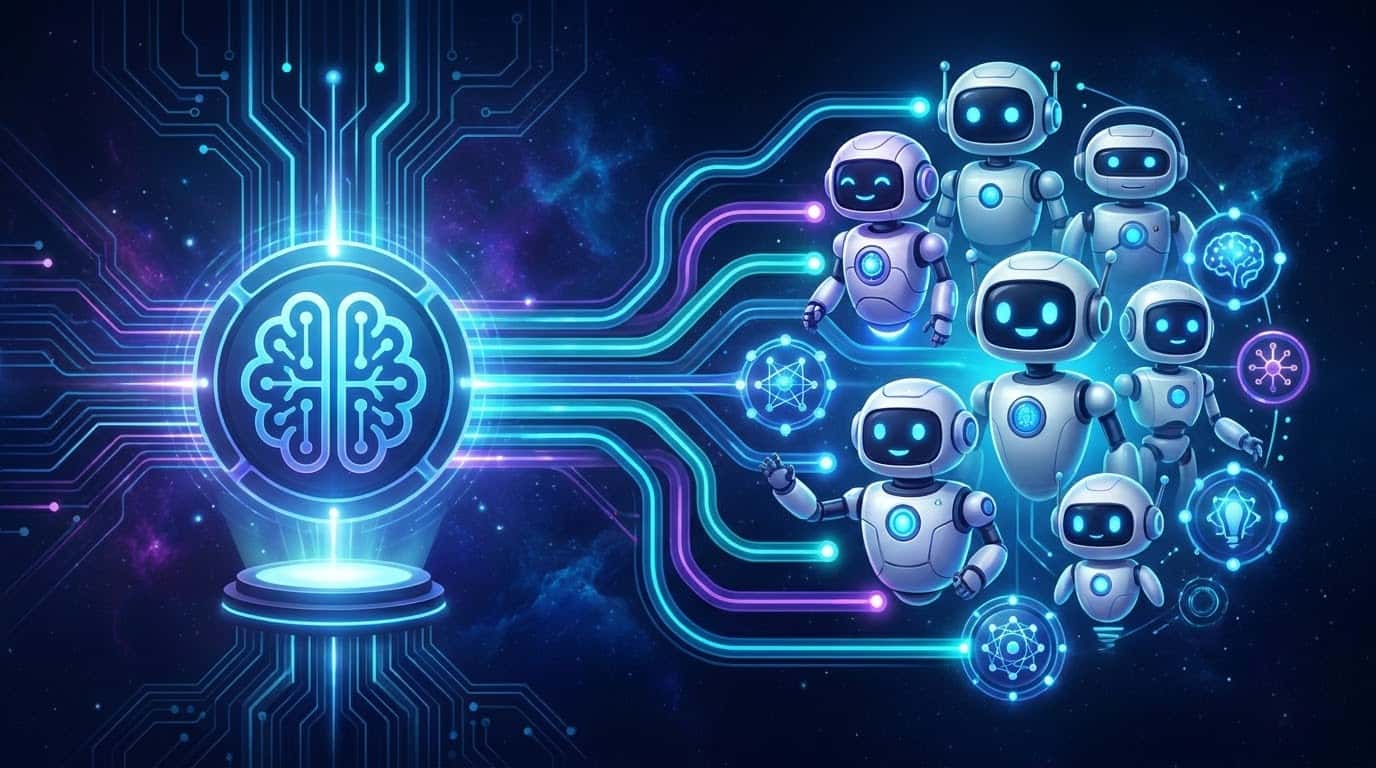
Instead of relying on a single AI model, organisations are building teams of AI agents that work together. Each agent has a specific role. Together, they solve problems faster, handle larger workloads, and produce better results.
What Is a Multi-Agent System?
A multi-agent system (MAS) is a group of AI agents that communicate and collaborate to achieve a shared goal.
Each agent performs a specific task.
For example:
- One agent gathers information
- One agent analyzes data
- One agent creates outputs
- One agent checks quality
- One agent manages workflow
The agents work together like a human team.
This approach often delivers better results than using a single AI agent.
Why Single AI Agents Are No Longer Enough
Many organisations start with one AI assistant.
At first, this works well.
However, as tasks become more complex, problems appear:
- Too many responsibilities for one agent
- Limited context handling
- Increased hallucinations
- Slower execution
- Poor scalability
Imagine asking one employee to be a researcher, analyst, writer, editor, project manager, and customer support specialist.
The results would likely suffer.
The same challenge exists with AI.
Multi-agent systems solve this problem through specialisation.
How Multi-Agent Systems Work
A multi-agent system follows a simple process.
Step 1: Receive a Goal
The system receives an objective.
Example:
"Create a competitive market analysis report."
Step 2: Break the Goal Into Tasks
A coordinator agent divides the work.
Tasks may include:
- Research
- Data collection
- Competitor analysis
- Report writing
- Fact checking
Step 3: Assign Specialized Agents
Each task goes to an agent designed for that job.
Step 4: Agents Collaborate
Agents share information and progress updates.
Step 5: Review and Deliver
The final output is reviewed and delivered to the user.
This process mirrors how successful human teams operate.
Single-Agent vs Multi-Agent Systems
For simple tasks, a single agent may be enough.
For business operations and enterprise workflows, multi-agent systems often perform better.
Core Components of a Multi-Agent System
Understanding the building blocks helps you design effective systems.
1. AI Agents
Agents are autonomous software entities.
Each agent has:
- A goal
- A role
- Access to tools
- Decision-making abilities
Examples include:
- Research Agent
- Planning Agent
- Coding Agent
- Quality Assurance Agent
2. Orchestrator
The orchestrator manages the workflow.
Responsibilities include:
- Assigning tasks
- Coordinating agents
- Monitoring progress
- Combining outputs
Think of the orchestrator as a project manager.
3. Communication Layer
Agents need to exchange information.
The communication layer enables:
- Message sharing
- Status updates
- Context transfer
- Task coordination
Without communication, collaboration becomes difficult.
4. Shared Memory
Shared memory provides common knowledge.
Examples include:
- Company documents
- Knowledge bases
- Customer information
- Project history
This ensures agents work from the same information.
5. Tools and Integrations
Agents become more powerful when connected to tools.
Examples include:
- Search engines
- CRM systems
- Databases
- Email platforms
- Analytics software
Tools allow agents to take real actions.
Why Businesses Are Investing in Multi-Agent AI
Organisations are adopting multi-agent systems for several reasons.
1. Faster Execution
Multiple agents can work simultaneously.
This reduces completion times.
2. Better Accuracy
Specialised agents focus on specific tasks.
This often improves quality.
3. Greater Scalability
New agents can be added when workflows grow.
4. Reduced Operational Costs
Automation lowers manual effort.
5. Improved Decision-Making
Agents can review and validate each other's work.
This helps reduce mistakes.
Real-World Multi-Agent System Examples
Customer Support
A support workflow may include:
- Ticket classification agent
- Knowledge retrieval agent
- Resolution agent
- Escalation agent
Benefits:
- Faster response times
- Better customer experiences
- Reduced support costs
Software Development
AI coding teams often include the following:
- Planner agent
- Coding agent
- Testing agent
- Security agent
- Documentation agent
This mirrors real development teams.
Marketing Operations
Marketing departments can deploy:
- Research agent
- SEO agent
- Content writer agent
- Editor agent
- Performance analysis agent
The result is faster content production and optimisation.
Financial Services
Banks use specialised agents for:
- Fraud detection
- Compliance reviews
- Risk assessment
- Customer communication
Each agent focuses on a specific function.
Healthcare
Healthcare organisations may deploy agents for:
- Patient scheduling
- Medical record retrieval
- Clinical analysis
- Administrative support
This helps reduce workload for healthcare professionals.
How to Build a Multi-Agent System
Building a successful system requires planning.
Step 1: Define the Business Goal
Start with a clear objective.
Examples:
- Improve customer support
- Automate content creation
- Accelerate software delivery
- Enhance sales intelligence
Clear goals improve system design.
Step 2: Map the Workflow
Break the objective into smaller tasks.
Ask:
- What work needs to be completed?
- Which tasks require specialisation?
- What information is needed?
Document the entire process.
Step 3: Design Agent Roles
Create specialised agents.
Example:
For content marketing:
- Research Agent
- SEO Agent
- Writer Agent
- Editor Agent
- Publisher Agent
Avoid giving one agent too many responsibilities.
Step 4: Define Communication Rules
Establish how agents exchange information.
Decide:
- What data is shared
- When updates occur
- How decisions are approved
Clear communication reduces errors.
Step 5: Implement Shared Memory
Provide a central source of truth.
This may include:
- Internal documents
- Customer data
- Product information
- Knowledge repositories
Shared memory improves consistency.
Step 6: Connect External Tools
Allow agents to interact with systems.
Examples:
- Google Search
- CRM software
- Databases
- Email platforms
- Business intelligence tools
This enables agents to perform real work.
Step 7: Add Monitoring and Governance
Track system performance.
Monitor:
- Task completion rates
- Error frequency
- Agent communication
- Resource usage
Governance is critical for enterprise deployments.
Step 8: Measure Results
Evaluate business impact.
Metrics may include:
- Cost savings
- Productivity gains
- Accuracy improvements
- Customer satisfaction
Continuous optimisation is essential.
Best Frameworks for Building Multi-Agent Systems
Several frameworks simplify development.
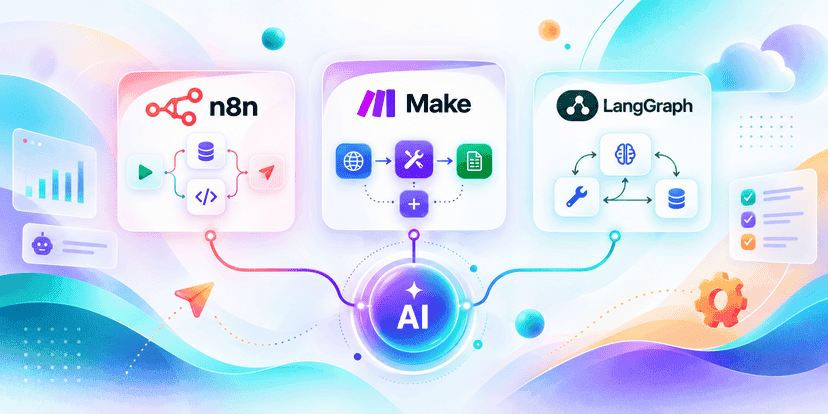
LangGraph
Best for:
- Complex workflows
- Enterprise applications
- State management
Advantages:
- Flexible architecture
- Strong orchestration capabilities
CrewAI
Best for:
- Role-based collaboration
- Business workflows
Advantages:
- Easy to use
- Agent specialization support
AutoGen
Best for:
- Conversational agent systems
- Research workflows
Advantages:
- Strong agent communication
- Multi-agent coordination
Semantic Kernel
Best for:
- Microsoft environments
- Enterprise integration
Advantages:
- Strong enterprise support
- Flexible architecture
OpenAI Agents SDK
Best for:
- Production-grade applications
- Tool-using agents
Advantages:
- Native model integration
- Reliable orchestration
Common Challenges and How to Solve Them
Challenge 1: Agent Conflicts
Problem:
Agents produce conflicting outputs.
Solution:
Use validation agents and approval workflows.
Challenge 2: Hallucinations
Problem:
Agents generate inaccurate information.
Solution:
Connect agents to trusted data sources and retrieval systems.
Challenge 3: Communication Overload
Problem:
Too many messages between agents.
Solution:
Create structured communication protocols.
Challenge 4: Memory Management
Problem:
Agents lose context.
Solution:
Use centralised memory and retrieval systems.
Challenge 5: Scaling Complexity
Problem:
Adding agents increases management difficulty.
Solution:
Use orchestration frameworks and clear governance.
Multi-Agent System Best Practices
Follow these principles for success.
1. Keep Agents Specialized
Each agent should focus on one responsibility.
2. Limit Agent Scope
Avoid creating overly complex agents.
3. Use Shared Knowledge
Maintain a single source of truth.
4. Add Human Oversight
Keep humans involved for critical decisions.
5. Monitor Performance
Track outputs and continuously improve.
6. Design for Failure
Expect errors and create recovery processes.
The Future of Multi-Agent Systems
Multi-agent AI is still evolving.
Several trends are emerging.
1. AI Teams Instead of AI Tools
Organisations will deploy teams of agents rather than isolated assistants.
2. Autonomous Business Operations
Agents will manage complete workflows with minimal human intervention.
3. Agent-to-Agent Collaboration
Different AI systems will communicate across platforms.
4. Industry-Specific Agent Networks
Healthcare, finance, manufacturing, and retail will develop specialised agent ecosystems.
5. Self-Improving Systems
Future agents will learn from previous outcomes and improve performance automatically.
Frequently Asked Questions
What is a multi-agent system?
A multi-agent system is a collection of AI agents that communicate and collaborate to achieve a shared goal.
What is the difference between a single AI agent and a multi-agent system?
A single AI agent performs all tasks alone. A multi-agent system distributes work among specialised agents.
Why are multi-agent systems important?
They improve scalability, accuracy, efficiency, and reliability for complex workflows.
Which framework is best for building multi-agent systems?
Popular options include LangGraph, CrewAI, AutoGen, Semantic Kernel, and OpenAI Agents SDK.
Can businesses use multi-agent systems today?
Yes. Many organisations already use multi-agent systems for customer support, software development, marketing, finance, and operations.
Final Thoughts
The future of AI is not a single intelligent assistant.
It is a coordinated team of AI agents working together.
Organisations that learn how to design, deploy, and manage multi-agent systems today will be better positioned to automate workflows, improve decision-making, and scale operations tomorrow.
Rather than asking what one AI agent can do, businesses should start asking what a team of AI agents can achieve together.
Ready to Build Multi-Agent AI Systems?
Multi-agent systems are quickly becoming the foundation of next-generation AI applications. By combining specialised AI agents, businesses can automate complex workflows, improve decision-making, and scale operations more efficiently.
If you're exploring AI agents for your organisation, start small, focus on clear business outcomes, and design systems that allow agents to collaborate effectively. The sooner you begin experimenting with multi-agent architectures, the faster you'll unlock real business value from AI.
Need help designing or implementing a multi-agent AI solution? Contact our team to explore the right strategy for your business.